
Hi, I'm Ericka F.. I live in Chicago.
Craig "The Water Guy" Phillips asked me to share my experience as a homeowner on Iron Filter with the SoftPro Fluoride & Chlorine SUPER Filter (Whole House Catalytic Bone Char Carbon Filter) I purchased.
This is how my adventures played out. I hope this helps you in your decision.
Did you know that the average American household uses over 300 gallons of water daily?
For families like mine dealing with heavily chlorinated municipal water, every gallon matters. When you can smell chlorine the moment you turn on a faucet and watch your hair become increasingly damaged from daily showers, you realize that clean water isn't just a luxury—it's essential for your family's health and comfort.
After eighteen months of living with the SoftPro Fluoride & Chlorine SUPER Filter, I can confidently say it transformed our water quality and simplified our daily routine in ways I never expected. This isn't just another product review; it's the story of how one filtration system solved multiple water problems while saving us money and improving our quality of life.
The Water Crisis That Changed Everything
Living in Coldwater, Ohio, I thought we had typical municipal water challenges. Boy, was I wrong.
Our city pre-softens the water supply, which sounds helpful until you understand the chemical cocktail involved. The softening process introduces significant amounts of salt, which then requires additional chemicals to prevent pipe corrosion. The result? Water that smelled like a swimming pool and left my family dealing with multiple side SoftPro Fluoride Filtration effects.
The chlorine smell hit you immediately—not subtle, not occasional, but every single time we used water. Turning on the shower felt like walking into an indoor pool facility. My hair, once manageable and healthy, became increasingly frizzy and dry despite expensive shampoos and treatments.
But the real wake-up call came when I started researching fluoride exposure. Studies suggesting potential correlations between fluoride and cognitive issues, including Alzheimer's and lowered IQ, kept me awake at night.
We were distilling multiple gallons daily—drinking water for our family of four and clean water for our houseplants. Our countertop distiller ran constantly, using significant electricity and producing only small batches. The process was time-consuming, expensive, and frankly exhausting.
I calculated that we spent approximately $150 monthly on electricity for distillation, plus the cost of replacement parts and the hours spent monitoring the process. When friends suggested reverse osmosis systems, the installation quotes ranged from $3,000 to $5,500—well beyond our budget.
Something had to change. Our water problems were affecting our health, our budget, and our daily routine.
Research Journey: Finding the Right Solution
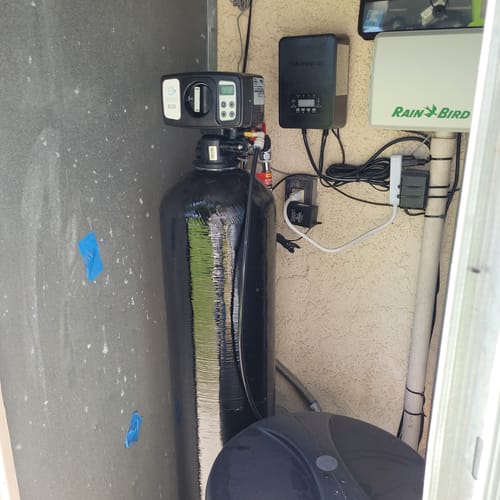
My research phase lasted three months and involved countless hours comparing technologies, reading studies, and understanding water treatment methods.
Initially, I focused on point-of-use solutions—under-sink filters, countertop units, and pitcher systems. But treating water room by room seemed inefficient when the problem affected our entire house.
Reverse osmosis kept appearing as the "gold standard," but the costs and complexity concerned me. Professional installation, ongoing maintenance, wastewater production, and the removal of beneficial minerals made me hesitant.
Then I discovered catalytic carbon technology. Unlike standard carbon filters that rely purely on absorption, catalytic carbon actually converts contaminants through chemical reactions. This process proved more effective for chlorine and chloramine removal while lasting longer than traditional carbon media.
Bone char carbon added another dimension—specifically effective for fluoride reduction. Most carbon filters can't touch fluoride, but bone char's unique porous structure and mineral composition make it exceptionally effective for this contaminant.
The SoftPro system combined both technologies in an upflow design. Upflow systems prevent channeling and ensure complete media contact, maximizing filtration efficiency.
NSF certification was non-negotiable. I needed third-party verification that the system actually performed as advertised. SoftPro's certifications for chlorine reduction and structural integrity provided the credibility I required.
The 10-year warranty sealed the decision. Most filters offer 1-3 year warranties, but SoftPro's confidence in their construction suggested superior build quality and long-term reliability.
Installation Experience: Easier Than Expected
The system arrived in sturdy packaging with every component clearly labeled and protected. The fiberglass tank felt substantial—definitely built for long-term use rather than quick replacement.
My husband and I completed the installation in about four hours, including reading the manual twice.
The pre-installation requirements were straightforward: adequate space near the water main, access to a drain for backwashing, and a standard electrical outlet. We chose a spot in our basement utility room where everything was easily accessible.
The bypass valve installation required cutting into our main water line—initially intimidating, but the included instructions were clear and the connections straightforward. Having basic plumbing tools and pipe cutting experience helped, though the manual suggested professional installation for those uncomfortable with plumbing modifications.
Programming the control head took about fifteen minutes. The digital interface allowed us to set regeneration frequency based on water usage and hardness levels. We started with the recommended settings and planned to adjust based on actual performance.
First startup was exciting. The system immediately began its initial backwash cycle, and within thirty minutes, we had filtered water throughout the house.
The difference was noticeable within hours. The chlorine smell disappeared completely—not reduced, eliminated. Taking a shower without that chemical odor felt luxurious after years of swimming-pool water.
Performance Analysis: Real-World Results

After eighteen months of daily use, I can provide specific performance data based on our household's experience.
Chlorine Elimination: Complete removal confirmed by smell, taste, and TDS testing. Our municipal water arrives with 2-4 PPM chlorine; post-filtration testing shows zero detectable levels.
Fluoride Reduction: We measured 0.8 PPM fluoride in our incoming water. After filtration, levels dropped to approximately 0.2 PPM—a 75% reduction that brings us well within naturally occurring levels.
Flow Rate: No noticeable pressure reduction at fixtures. The system maintains 15 GPM flow rate even during peak usage periods when multiple outlets operate simultaneously.
Hair and Skin Improvements: This surprised me most. Within three weeks, my hair became noticeably smoother and less frizzy. My youngest daughter's eczema, which we'd attributed to other factors, improved significantly once she stopped bathing in chlorinated water.
Appliance Protection: Our coffee maker no longer develops mineral buildup. The dishwasher rinses cleaner, and our washing machine seems more effective with soap products.
Cost Savings: We eliminated distilled water purchases (previously $40-60 monthly) and reduced our electricity bill by approximately $150 monthly by discontinuing the distillation process.
Plant Health: Our houseplants responded dramatically to chlorine-free water. Plants that struggled previously began thriving, with noticeably greener foliage and stronger root systems.
Maintenance Reality: What Actually Happens
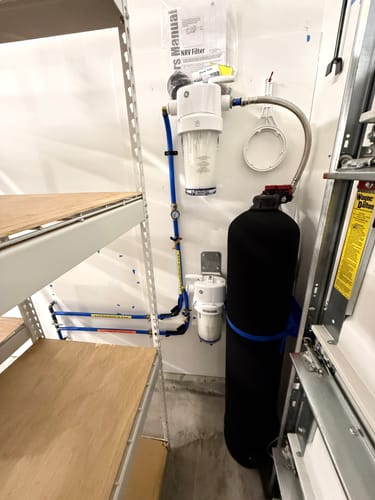
Eighteen months in, I can speak honestly about the ongoing maintenance requirements and costs.
The system automatically backwashes every three days, consuming approximately 50 gallons per cycle.
This initially concerned me—200 gallons monthly seemed like a lot. However, considering we previously wasted water during distillation and constantly ran faucets to clear chlorine smell, the actual increase in water usage was minimal.
Media replacement represents the primary ongoing cost. The catalytic carbon and bone char media need replacement every 3-5 years, depending on water quality and usage. Current replacement cost is approximately $400—significantly less than our previous distillation expenses over the same period.
System monitoring requires minimal effort. The digital control head displays cycle information and service reminders. I check it monthly, though the system operates entirely automatically.
The most time-consuming maintenance task is annual sanitization—about an hour of work involving adding chlorine solution to the tank, running a cycle, then flushing the system. The manual provides clear instructions, and SoftPro's customer service offers phone support if needed.
**One minor maintenance surprise:** The drain line occasionally requires cleaning to prevent slow drainage during backwash cycles. This five-minute task prevents backup and ensures proper system operation.
Unexpected Benefits and Discoveries
Living with the SoftPro system revealed benefits I hadn't considered during my initial research.
Soap Performance: Without chlorine interference, soaps and shampoos became more effective. We actually reduced product usage because they lather better and clean more thoroughly.
Food and Beverage Taste: Coffee, tea, and cooking improvements were dramatic. The chlorine taste that masked subtle flavors disappeared, making everything taste cleaner and more vibrant.
Ice Quality: Our refrigerator ice maker produces crystal-clear ice without the cloudy appearance and chemical taste we'd accepted as normal.
Laundry Results: Colors stay brighter longer, and fabrics feel softer without chlorine damage. Our towels maintain absorbency better over time.
Guest Reactions: Visitors consistently comment on our water quality. Several friends have installed similar systems after experiencing the difference at our house.
Peace of Mind: Knowing our family drinks, cooks, and bathes in truly clean water provides psychological benefits I hadn't anticipated. The constant worry about chemical exposure is gone.
Investment Analysis: True Cost of Ownership
After eighteen months, I can provide accurate financial analysis of this system's value proposition.
Initial Investment: $1,847 for the complete system, delivered to our door. Installation cost nothing since we did it ourselves, though professional installation would add $300-500.
Monthly Operating Costs:
- Electricity: approximately $8 monthly for control head and backwash pump
- Water usage: roughly $15 monthly for backwash cycles
- Total monthly operational cost: $23
Annual Maintenance: Minimal costs for sanitization supplies (under $20 annually)
Long-term Costs: Media replacement every 3-5 years at approximately $400
Savings Generated:
- Eliminated distilled water purchases: $50 monthly
- Reduced electricity from distillation: $150 monthly
- Decreased soap and shampoo usage: $25 monthly
- Total monthly savings: $225
Net Monthly Benefit: $202 in positive cash flow
Payback Period: The system paid for itself in approximately nine months. Every month since has generated net savings while providing superior water quality.
Five-Year Projection: Total cost including media replacement: approximately $2,650. Savings over the same period: roughly $13,500. Net benefit: over $10,000.
Final Assessment: Worth Every Penny
Eighteen months later, I'd make the same decision again without hesitation. The SoftPro Fluoride & Chlorine SUPER Filter solved every water problem we faced while saving money and improving our quality of life.
This system excels for families dealing with heavily chlorinated municipal water, fluoride concerns, or anyone tired of buying distilled water.
It's particularly valuable for households with sensitive skin, hair damage from chemical exposure, or anyone who notices taste issues with their current water supply.
The upflow design, dual-media approach, and robust construction justify the investment. NSF certification and the 10-year warranty provide confidence in long-term performance.
Would I recommend alternatives? For simple chlorine removal, basic carbon filters might suffice. For severe contamination or budget constraints under $1,000, point-of-use systems could work. But for comprehensive whole-house treatment of chlorine and fluoride with professional-grade results, this system delivers exceptional value.
Our water problems are solved. Our monthly expenses decreased significantly. Our health concerns about chemical exposure are gone. Sometimes the right solution transforms your daily life in ways you never expected.
For our family, clean water throughout our entire home wasn't just an improvement—it was life-changing.