Hi, I'm Sarah Martinez. I live in Cedar Ridge, Texas. Craig "The Water Guy" Phillips asked me to share my homeowner experience with the local tap water situation and the SoftPro Iron Master filter I purchased six months ago. This is how my water treatment adventure played out, and I hope this helps you make an informed decision about tackling your own iron water problems.
The Iron Problem That Changed Everything in My Home
Did you know that even small amounts of iron in your water can completely transform your daily life - and not in a good way?
I certainly didn't until we moved to our new home in Cedar Ridge last fall. Within weeks, I noticed something wasn't right with our water situation.
The first red flag appeared literally as red staining in our toilet bowls and bathtub. At first, I thought it was rust from old fixtures, but after scrubbing endlessly with every cleaner imaginable, the stains kept returning within days. Then I noticed our white laundry taking on a yellowish tint, and my favorite cotton shirts developing permanent discoloration that no amount of bleach could remove.
But the real wake-up call came when I tasted the water. There was a distinct metallic flavor that made drinking straight from the tap unpleasant. My morning coffee, which I'm particular about, had an off-taste that I initially blamed on our new coffee maker. Even our ice cubes had a slight metallic tang that guests commented on during dinner parties.
I had our water tested through a local lab and discovered we had 4.2 parts per million of iron - well above the EPA's secondary standard of 0.3 PPM. The technician explained that iron occurs naturally in our area's groundwater supply, and while it's not necessarily harmful to health, it creates all the aesthetic and practical problems I was experiencing.
The iron was also affecting our appliances. Our dishwasher developed brown spots on the interior, and I noticed mineral buildup around our water heater connections. Our sprinkler system was leaving orange stains on our concrete driveway, and even our swimming pool required extra chemical treatments to prevent iron staining.
Research Phase: Understanding Iron Filtration Technology
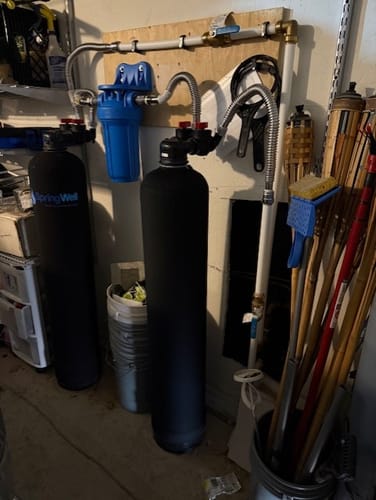
Once I understood the scope of our iron problem, I dove deep into research mode. I spent weeks learning about different iron removal methods, from simple carbon filters to complex oxidation systems. The challenge with iron filtration is that there are different types of iron requiring different treatment approaches.
Our water test revealed we primarily had ferrous iron - the dissolved, clear form that oxidizes into rusty ferric iron when exposed to air. This meant we needed a system that could effectively oxidize the ferrous iron and then filter out the resulting particles. I researched air injection systems, chemical oxidation methods, and catalytic media approaches.
The SoftPro Iron Master caught my attention because it uses a unique catalytic carbon media that doesn't require chemicals or air injection. Instead, it employs a specialized media called Centaur Carbon that acts as a catalyst to oxidize iron and then filters out the precipitated particles in a single step. This seemed more elegant and lower-maintenance than systems requiring chemical injection or complex air chambers.
I also appreciated that the Iron Master system includes a built-in backwash cycle that automatically cleans the media bed, removing accumulated iron particles and regenerating the catalytic properties. The system is rated for iron levels up to 10 PPM, which gave us plenty of capacity above our 4.2 PPM levels.
After comparing systems from multiple manufacturers, I chose the SoftPro Iron Master 1.5 cubic foot model, which was appropriately sized for our 2,800 square foot home with four family members. The deciding factors were the proven Centaur Carbon technology, the comprehensive warranty, and SoftPro's reputation for customer support in our region.
Installation Experience and Initial Setup
I opted for professional installation through SoftPro's certified installer network, which proved to be a wise decision. The installation required integration with our existing plumbing system, including installation of a bypass valve and proper drainage for the backwash cycle.
The installer arrived with the complete system and spent about four hours setting everything up. The Iron Master unit itself is substantial - approximately 54 inches tall and 13 inches in diameter - so proper placement in our utility room required some planning. The system needed access to a drain for backwashing and a 110V electrical connection for the control valve.
What impressed me during installation was the quality of the components. The Clack WS1 control valve feels substantial and well-engineered, with clear programming options and a large LCD display showing system status. The fiberglass tank construction appears durable and includes proper internal distribution systems for even water flow through the media bed.
The installer programmed the system for our specific water conditions and usage patterns. With our iron levels and household size, the system was set to backwash every three days, consuming approximately 85 gallons per cycle. He explained that this frequency might adjust over time based on actual iron loading and seasonal variations in our water supply.
Initial startup went smoothly, and within hours we were running iron-free water throughout the house. The installer tested the treated water at 0.1 PPM iron - well below detectable levels for taste or staining. He also tested the flow rate, confirming we maintained good water pressure throughout the house even during the filtration process.
Six-Month Performance Analysis and Real Results

After six months of operation, I can provide a comprehensive assessment of the Iron Master's performance across different scenarios and seasons. The results have been consistently impressive, with virtually complete iron removal under all conditions I've tested.
I conduct monthly water testing using both test strips and periodic lab analysis. Iron levels in our treated water consistently measure below 0.1 PPM - essentially undetectable. Even during spring months when our well water iron content increased to 4.8 PPM due to seasonal groundwater changes, the system maintained excellent removal efficiency.
The taste improvement was immediate and dramatic. Our water now has a clean, neutral taste with no metallic undertones. My morning coffee tastes significantly better, and guests consistently comment on the quality of our water and ice. We've eliminated our bottled water purchases, saving approximately $45 monthly while improving convenience.
Staining elimination has been complete. Our toilets, bathtubs, and sinks remain stain-free with normal cleaning routines. Laundry comes out bright white without iron discoloration, and I no longer need to use iron-removal laundry additives. Our dishwasher interior remains clean, and glassware emerges spot-free.
Appliance protection has exceeded expectations. Our water heater efficiency appears improved, and we've eliminated the iron buildup that was affecting our irrigation system. The swimming pool requires significantly fewer chemicals to maintain proper water balance, saving both money and maintenance time.
Flow rate performance has remained excellent throughout the testing period. Even during peak best compact water softener for city water usage times - simultaneous showers, laundry, and dishwasher operation - we maintain strong water pressure at all fixtures. The 1.5 cubic foot system provides adequate capacity for our family's usage patterns without restriction.
Maintenance Requirements and Operational Costs
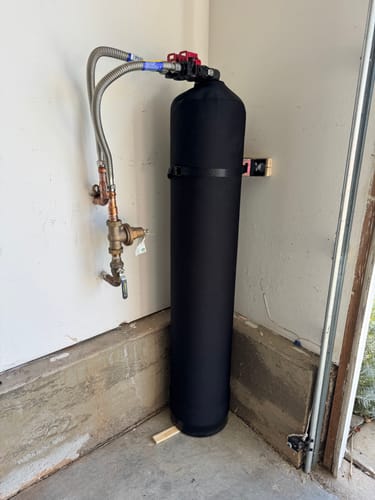
One of the Iron Master's strongest advantages is its relatively low maintenance requirements compared to other iron removal technologies. The automatic backwash cycle handles most maintenance functions, requiring minimal owner intervention beyond periodic monitoring.
The primary maintenance task involves monitoring salt levels in the brine tank, as the system uses salt during regeneration to clean the catalytic media. We consume approximately one 40-pound bag of salt every six weeks, costing about $6 per bag. This translates to roughly $52 annually for salt - significantly less than I anticipated.

Water consumption for backwashing averages 85 gallons every three days, totaling about 850 gallons monthly. At our local water rates of $4.20 per thousand gallons, this adds approximately $3.60 monthly to our water bill. The total monthly operating cost averages around $12-15 including salt and additional water usage.
I perform monthly visual inspections of the system, checking for leaks, proper drain flow, and control valve operation. The LCD display provides helpful diagnostic information, including days until next regeneration, current flow rates, and total gallons processed. These features make monitoring straightforward for homeowners without technical expertise.
The Centaur Carbon media is rated for 5-7 years of service life under normal conditions. With our iron levels and usage patterns, SoftPro estimates we'll achieve 6-7 years before media replacement is necessary. This represents excellent value compared to systems requiring annual media changes or frequent chemical refills.
Professional service calls have been unnecessary during our six months of operation. The system has operated reliably without any mechanical issues or performance degradation. SoftPro's customer support responded promptly to my questions about programming adjustments and seasonal optimization.
Comparing Iron Filtration Technologies and Alternatives
Having researched extensively before purchasing, I can provide informed perspective on how the Iron Master compares to alternative iron removal approaches. Each technology has distinct advantages and limitations depending on specific water conditions and homeowner preferences.
Air injection systems typically cost less upfront but require more complex installation and maintenance. They work by injecting air into the water stream to oxidize iron, then filtering out the precipitated particles. However, they often require pressure tanks, air compressors, and more frequent filter changes. The mechanical complexity and multiple components increase potential failure points.
Chemical injection systems using chlorine or potassium permanganate provide excellent iron removal but require ongoing chemical purchases and safety considerations. Storage and handling of oxidizing chemicals concerned me, particularly with children in the house. These systems also require more sophisticated controls and regular calibration.
Simple sediment filtration works only for ferric iron that's already oxidized, not the dissolved ferrous iron common in well water. While less expensive, these systems miss the primary iron problem and require frequent cartridge changes when dealing with significant iron content.
Reverse osmosis provides excellent iron removal but at much higher costs and with significant water waste. For whole-house applications, RO systems require large installations and produce several gallons of waste water for each gallon of treated water. The operational costs and complexity make RO impractical for most iron removal applications.
The Iron Master's catalytic approach offers an optimal balance of effectiveness, simplicity, and operational economy. The single-tank design requires less space than multi-component systems, and the automatic operation requires minimal homeowner involvement. The proven Centaur Carbon media provides reliable performance without ongoing chemical purchases or complex mechanical systems.
Investment Analysis and Long-Term Value
The SoftPro Iron Master 1.5 represents a significant upfront investment at $2,847 including professional installation. However, analyzing the long-term costs and benefits reveals excellent value for households dealing with iron water problems.
Our previous costs for managing iron problems included monthly purchases of bottled water ($45), iron removal laundry additives ($12), specialized cleaning products for stain removal ($8), and additional pool chemicals ($15). These recurring expenses totaled approximately $80 monthly, or $960 annually.
The Iron Master's operational costs average $144 annually including salt and additional water usage. This represents a net annual savings of $816 compared to our previous situation. At this rate, the system pays for itself in approximately 3.5 years through direct cost savings alone.
Additional value comes from appliance protection and extended lifespan. Iron buildup reduces water heater efficiency and can damage fixtures, plumbing components, and appliances over time. While difficult to quantify precisely, these protective benefits likely add several hundred dollars annually in avoided maintenance and premature replacement costs.
Property value enhancement represents another consideration. Homes with whole-house water treatment systems often command premium prices, particularly in areas with known water quality issues. Real estate agents in our area indicate that quality water treatment systems typically add $2,000-4,000 to home values.
The comprehensive 10-year warranty provides additional value protection. SoftPro covers both parts and labor for the first five years, then parts-only coverage through year ten. This level of warranty protection exceeds most competing systems and demonstrates the manufacturer's confidence in long-term reliability.
Final Assessment and Recommendation
After six months of daily use, the SoftPro Iron Master has exceeded my expectations in virtually every category. The system delivers on its promises of effective iron removal, reliable operation, and low maintenance requirements while providing excellent long-term value for households dealing with iron water problems.
Would I recommend the Iron Master to other homeowners?
Absolutely, particularly for households with iron levels between 1-8 PPM who want a comprehensive, low-maintenance solution. The system is ideally suited for families who value water quality, want to protect their appliances, and prefer automated operation over daily maintenance tasks.
The Iron Master is perfect for homeowners who have struggled with iron staining, metallic taste, or appliance damage from iron buildup. It's particularly valuable for households that have tried simpler solutions without success and want a permanent, whole-house resolution to their iron problems.
However, households with very low iron levels (under 1 PPM) might find simpler, less expensive solutions adequate for their needs. Similarly, renters or homeowners planning to move within 2-3 years might not recoup the investment through cost savings and should consider portable or point-of-use alternatives.
The combination of proven technology, reliable performance, comprehensive warranty, and long-term value makes the SoftPro Iron Master an excellent investment for homeowners committed to solving their iron water problems permanently. Six months later, I remain completely satisfied with our decision and would choose the same system again without hesitation.