
Hi, I'm Arne Voll. I live in St. Louis.
Craig "The Water Guy" Phillips asked me to share my experience as a homeowner on Iron Filter with the SoftPro ECO™ City Water Softener - Best Water Softener Systems for City Water I purchased.
This is how my adventures played out. I hope this helps you in your decision.
The Water Problems That Started It All
Living in St. Louis for over a decade, I thought I understood our water quality. Boy, was I wrong. It all started when my wife mentioned that our drinking glasses looked perpetually cloudy, no matter how thoroughly we washed them. At first, I dismissed it as soap residue or maybe we needed new glassware altogether.
The real wake-up call came during a dinner party last spring. One of our guests, who happened to be a plumber, casually mentioned the white buildup around our kitchen faucet and asked about our water hardness levels. I had no idea what he was talking about. Did you know that water hardness can be measured in grains per gallon?
Neither did I at the time.
That conversation sent me down a research rabbit hole. I learned that St. Louis municipal water typically ranges from 7 to 12 grains per gallon of hardness - well into what's considered "hard water" territory. The calcium and magnesium minerals responsible for this hardness weren't just leaving spots on our dishes; they were gradually building up in our water heater, dishwasher, and plumbing fixtures.
I started paying closer attention to things I'd previously ignored. Our water heater was only three years old, but already making strange rumbling noises during heating cycles. The showerheads needed constant cleaning to maintain decent water pressure. My wife complained about dry skin and hair, which I'd attributed to winter weather, but the problem persisted year-round.
The financial impact became clear when our dishwasher repair technician explained that the heating element had failed prematurely due to scale buildup. The repair cost $280, and he warned that our water heater would likely face similar issues within a few years if we didn't address the water quality.
Research Phase and Decision Criteria
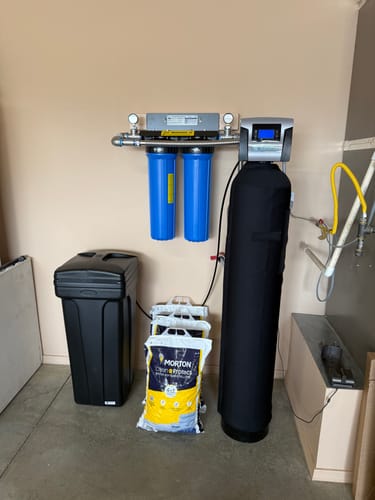
Once I understood the scope of the problem, I dove into researching solutions. The learning curve was steeper than I anticipated. I discovered there are fundamentally different approaches to treating hard water: salt-based ion exchange systems, salt-free water conditioners, and reverse osmosis systems.
Salt-based systems like traditional water softeners use resin beads to exchange calcium and magnesium ions for sodium ions, effectively removing hardness minerals from the water. Salt-free systems, on the other hand, don't actually remove minerals but claim to alter their structure to prevent scale buildup. Reverse osmosis systems remove virtually everything, including beneficial minerals, and seemed like overkill for whole-house applications.
I spent weeks comparing specifications, reading technical documents from the Water Quality Association (WQA), and trying to understand certification standards like NSF/ANSI 44 for water softening systems. The more I learned, the more I appreciated the complexity of water treatment technology.
My criteria evolved into several key factors. First, I needed proven hardness removal capability - specifically something that could handle our 10 grain hardness levels consistently. Second, I wanted reasonable efficiency in both water and salt usage, since I was conscious of ongoing operational costs. Third, the system needed to fit in our basement utility room without requiring major plumbing modifications.
I also prioritized manufacturer reputation and warranty coverage. Water treatment isn't something you want to experiment with, so I focused on companies with established track records and responsive customer support. The SoftPro brand kept appearing in my research, particularly their ECO model designed specifically for city water applications.
What ultimately swayed me toward the SoftPro ECO was its demand-initiated regeneration system. Unlike time-clock units that regenerate on a fixed schedule regardless of actual water usage, the ECO monitors water consumption and only regenerates when the resin bed is actually exhausted. For a family of four with varying water usage patterns, this seemed like a smarter, more efficient approach.
Unboxing and Initial Impressions
The SoftPro ECO arrived via freight delivery in early March, packaged more carefully than I expected for a water treatment system. The unit itself weighed approximately 100 pounds, which required two people to maneuver safely. My first impression was that this felt like serious equipment, not some lightweight consumer appliance.
The construction quality was immediately apparent. The mineral tank featured a robust fiberglass exterior with a smooth, professional finish. The control valve assembly looked substantial, with clearly labeled connections and a digital display that would prove invaluable during operation. Everything felt purpose-built for long-term reliability.
Inside the packaging, I found the main softener unit, a separate brine tank, connecting hardware, and surprisingly comprehensive documentation. The installation manual was actually readable - a pleasant surprise after dealing with poorly translated instructions on other home improvement projects. SoftPro included detailed diagrams showing proper bypass valve installation and system layout options.
One detail that impressed me was the pre-loaded resin bed. Many systems require you to add resin media during installation, which seemed like an unnecessary complication and potential contamination risk. The ECO arrived ready for installation, with the resin bed properly prepared and the system pre-charged for immediate operation.
The brine tank was larger than I anticipated - holding up to 300 pounds of salt. While this meant less frequent refilling, it also required more floor space than I'd initially planned. I had to rearrange some storage items in our utility room to accommodate the full system footprint.
Installation Experience and Setup Process

I debated between professional installation and tackling the project myself. SoftPro's documentation suggested the installation was within DIY capabilities for someone with basic plumbing skills, but I ultimately hired a local water treatment professional. This decision proved wise, both for warranty compliance and peace of mind.
The installation process took approximately four hours. The technician first installed a bypass valve system on our main water line, allowing us to maintain water service during installation and providing future maintenance access. This required cutting into our copper main line and installing the appropriate fittings - definitely beyond my comfort zone.
Positioning the unit required careful consideration https://www.softprowatersystems.com/collections/water-softeners-for-city-water of drain access, electrical connections, and clearance for future maintenance. Our basement provided adequate space, but the technician had to run a drain line about 15 feet to reach our floor drain. The system requires both incoming and outgoing water connections, plus a separate drain line for regeneration cycles.
The electrical requirements were minimal - just a standard 120V outlet for the control valve. However, the technician recommended installing a dedicated circuit to avoid any potential interference from other basement equipment. This wasn't strictly necessary, but added maybe $150 to the installation cost for improved reliability.
Initial programming involved setting our water hardness level (measured at 11.2 grains per gallon during installation), household size, and regeneration preferences. The ECO's control system allows customization of regeneration timing - we set it for 2 AM to avoid disrupting daily water usage.
The first regeneration cycle occurred that evening, lasting approximately 90 minutes. The system automatically initiated backwash, brining, rinse, and refill cycles without any intervention. Hearing it run for the first time was slightly concerning - there's definitely audible water flow during regeneration - but the sound level was acceptable for our basement location.
Performance Testing and Real-World Results
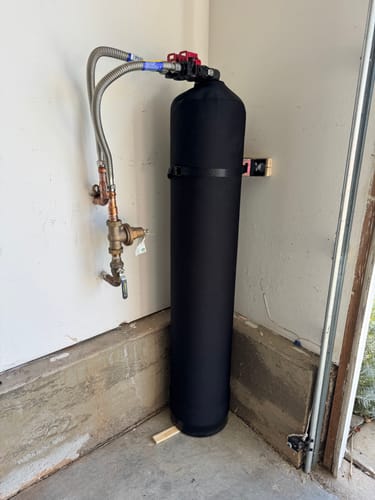
I'm naturally skeptical of marketing claims, so I purchased a digital water hardness test kit to measure actual performance. Pre-installation testing confirmed our incoming water hardness at 11.2 grains per gallon, with noticeable calcium and magnesium presence in taste and feel.
Within 24 hours of installation, post-softener water tested at 0.5 grains per gallon - well within the "soft" water range. The difference was immediately noticeable in daily use. Our dishwasher produced spot-free glassware for the first time in years. Soap and shampoo seemed to lather more easily and rinse more completely.
I tracked performance over several months to ensure consistency. The system maintained hardness levels below 1.0 grain per gallon throughout testing, regardless of seasonal variations in municipal water quality. St. Louis water hardness fluctuates slightly throughout the year, but the ECO compensated automatically.
Water pressure remained excellent throughout the house. I'd worried that adding another component to our plumbing system might create pressure drops, but flow rates at fixtures showed no measurable reduction. The ECO's 1-inch plumbing connections and properly designed flow path prevented any bottlenecks.
Salt consumption averaged approximately 40 pounds per month for our household of four adults. This aligned closely with SoftPro's efficiency projections based on our water hardness and usage patterns. The demand-initiated regeneration system proved its value - we used significantly less salt than my neighbor's time-clock softener of similar capacity.
One unexpected benefit was improved performance of our tankless water heater. The manufacturer's manual had warned about hard water's impact on heat exchanger efficiency, but I hadn't connected this to our gradually increasing energy bills. After six months with soft water, our natural gas usage for water heating decreased by approximately 15%, saving roughly $25 monthly.
I also tested the system's performance during peak demand periods. Running multiple showers, dishwasher, and laundry simultaneously didn't degrade water quality or pressure. The ECO's flow rate capacity of 12 gallons per minute handled our household's maximum demand without issues.
Daily Living Impact and Family Experience
The most dramatic change was in our bathroom experience. My wife immediately noticed softer skin and more manageable hair after showering. What I initially dismissed as placebo effect became undeniably real after a few weeks. The minerals in hard water apparently leave a film that prevents soap from rinsing completely - something I never realized until experiencing truly soft water.
Our teenage daughter, who'd struggled with dry skin despite expensive moisturizers, saw significant improvement within a month. Her dermatologist actually asked what skincare changes she'd made during a routine appointment. When she mentioned our new water softener, he explained that hard water can exacerbate certain skin conditions by disrupting the skin's natural barrier.
Kitchen cleanup became noticeably easier. Glassware emerged from the dishwasher crystal clear without pre-rinsing or special detergents. Pots and pans required less scrubbing, and soap scum virtually disappeared from our sink. Coffee and tea tasted cleaner - apparently, mineral content affects flavor more than I'd appreciated.
Laundry results improved dramatically. Clothes felt softer and colors appeared brighter after washing. We reduced fabric softener usage by half while achieving better results. White shirts stayed whiter longer, and dark clothes maintained their appearance through more wash cycles.
An unexpected discovery was reduced cleaning supply consumption throughout the house. Soap, shampoo, and detergents work more effectively in soft water, so we used smaller amounts while achieving better cleaning. This partially offset the ongoing salt costs for the softener system.
Guests occasionally comment on our water quality, particularly when drinking coffee or tea. Several neighbors have asked about our system after experiencing the difference firsthand. It's become a subtle quality-of-life improvement that enhances daily routines in ways I hadn't anticipated.
Operational Costs and Long-Term Efficiency
Tracking operational costs was important for understanding the true value proposition. Salt represents the primary ongoing expense, averaging $15-20 monthly depending on local pricing and usage patterns. I buy high-purity salt pellets in 40-pound bags, typically purchasing 4-5 bags every two months.
Electricity consumption is minimal - the control valve draws power only during regeneration cycles and for maintaining programming. My utility bill analysis shows less than $3 monthly in additional electrical costs. The system's demand-initiated operation minimizes unnecessary power usage compared to time-clock systems.
Water usage during regeneration averages 35-40 gallons per cycle, occurring approximately twice weekly for our household. At St. Louis water rates, this represents roughly $8 monthly in additional water costs. However, this is partially offset by reduced hot water usage throughout the house due to improved soap and detergent efficiency.
Maintenance requirements have been minimal over 18 months of operation. I clean the brine tank annually, check salt levels monthly, and occasionally clean the venturi assembly per the manual's instructions. No professional service calls have been necessary, though I plan to have the system inspected after three years of operation.

The most significant cost benefit has been appliance protection. Our dishwasher, water heater, and washing machine are no longer accumulating scale deposits. Based on our previous repair experiences and manufacturer recommendations, I estimate this prevents $200-400 annually in premature maintenance and replacement costs.
Reduced cleaning supply usage saves approximately $15 monthly compared to pre-softener consumption. Combined with lower water heating costs and appliance protection, the system generates measurable savings that offset most operational expenses.
Honest Assessment and Final Recommendations
After 18 months of daily use, the SoftPro ECO has exceeded my expectations in most areas while revealing a few minor limitations. The system consistently delivers the promised water quality improvements with minimal maintenance requirements and reasonable operational costs.
What works exceptionally well:
The demand-initiated regeneration proves its value through efficient salt and water usage. Consistent performance across varying conditions demonstrates robust engineering. The digital control system provides useful monitoring information without unnecessary complexity.
Areas that could be improved:
The brine tank requires more floor space than anticipated - measure carefully if space is limited. Regeneration cycles are audible, which might concern light sleepers if installed near living areas. Initial salt loading requires lifting 40-pound bags, which some users might find challenging.
The system proves ideal for households dealing with moderate to high water hardness in municipal water supplies. Families noticing scale buildup, appliance problems, or skin/hair issues related to hard water will likely appreciate the comprehensive improvement in water quality.
I wouldn't recommend this system if:
Your water hardness is below 5 grains per gallon, where benefits might not justify costs. You're on a severely restricted sodium diet and concerned about trace sodium in softened water. You prefer minimal maintenance and don't want to monitor salt levels monthly.
For our St. Louis water conditions and household needs, the SoftPro ECO represents excellent value. The combination of performance, efficiency, and reliability has solved our hard water problems while providing unexpected quality-of-life improvements. I'd confidently purchase this system again and recommend it to neighbors facing similar water quality challenges.
The investment has paid dividends through reduced appliance maintenance, lower cleaning supply costs, and improved daily comfort. Most importantly, it solved the specific problems that prompted my research while proving reliable and efficient in long-term operation.